Circularity and Environmental Management
Circularity and Environmental Management
Turning resource use and environmental impact into measurable performance and control
Creating structure where resources, impacts and obligations intersect
Circularity and environmental performance sit at the intersection of product design, procurement, operations, and regulation. Companies face increasing pressure to reduce resource use, emissions, and waste while maintaining cost efficiency, product performance, and regulatory compliance.
A structured approach to circularity and environmental management helps organisations understand material flows, identify inefficiencies, and translate sustainability ambitions into operational levers across the value chain.
From environmental ambition to operational decision-making
Circularity and environmental targets only create value when they are grounded in data, clear responsibilities, and realistic implementation pathways. Many organisations struggle to connect high-level goals with concrete actions in R&D, procurement, and operations.
We support organisations in translating environmental objectives into decision-ready insights linking material flows, environmental KPIs, and cost considerations to prioritised actions and clear roadmaps.
A robust basis for compliance, performance management, and reporting
Environmental management and circularity are increasingly shaped by regulatory requirements such as PPWR, Ecodesign, REACH and CBAM. A consistent and well-documented approach enables organisations to meet compliance obligations while strengthening internal controls and governance.
By aligning circularity and environmental performance with KPIs, monitoring processes, and reporting structures, organisations can reduce rework, improve audit readiness, and ensure year-over-year consistency.
Circularity is not a design exercise alone. It is a cross-functional transformation of how materials, products, and resources are managed across the business.
Circularity & Resource Transformation
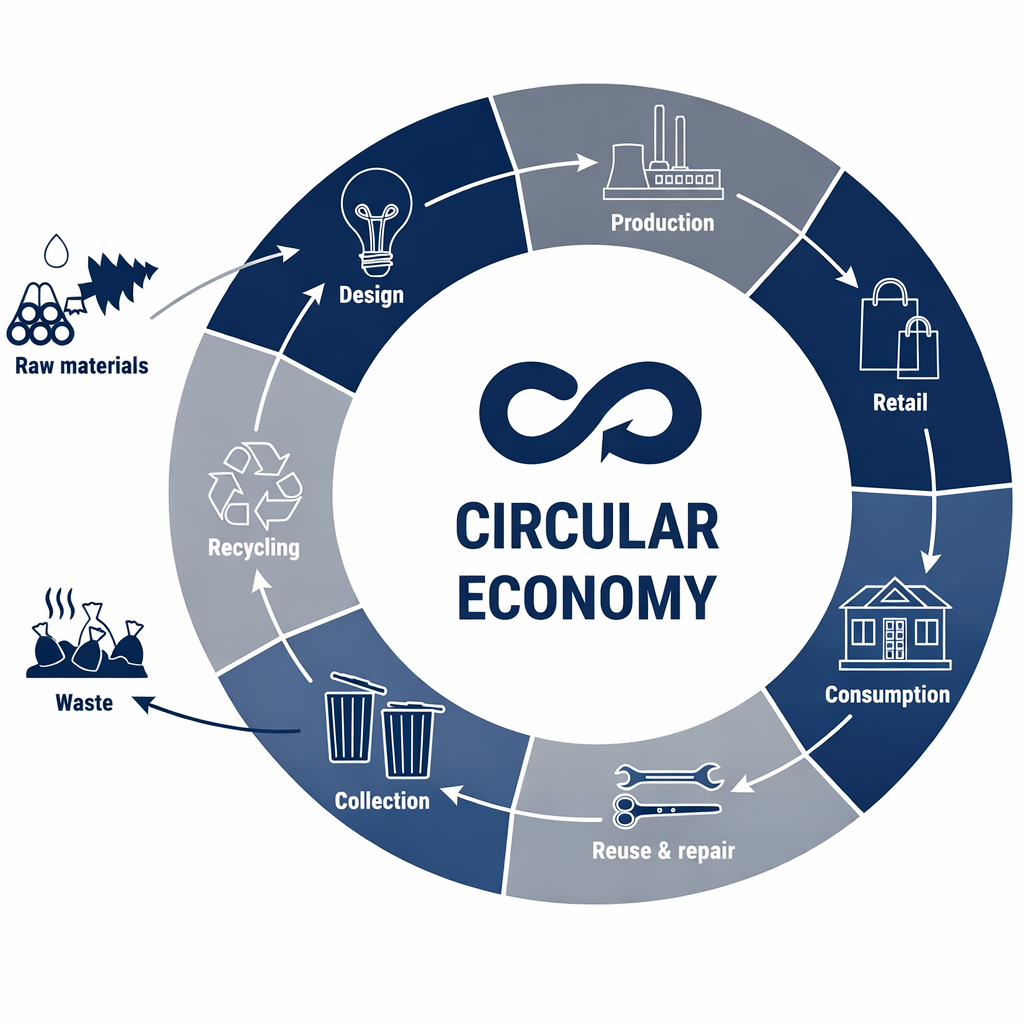
Our Circularity & Resource Transformation service supports organisations in understanding and redesigning material flows across products, packaging, and operations. It is designed for companies seeking to reduce resource intensity, improve circular performance, and meet emerging regulatory expectations.
We conduct material-flow mapping and circularity assessments to identify hotspots such as waste, scrap, losses, and inefficiencies. Building on this, we develop circular design concepts, assess procurement levers including reuse, repair, refurbishment, and secondary materials, and model cost and impact implications. The result is a practical roadmap that integrates R&D, procurement, operations, and supply chain aligned with PPWR, Ecodesign, and CSRD (ESRS E5).
Climate & Environmental Management
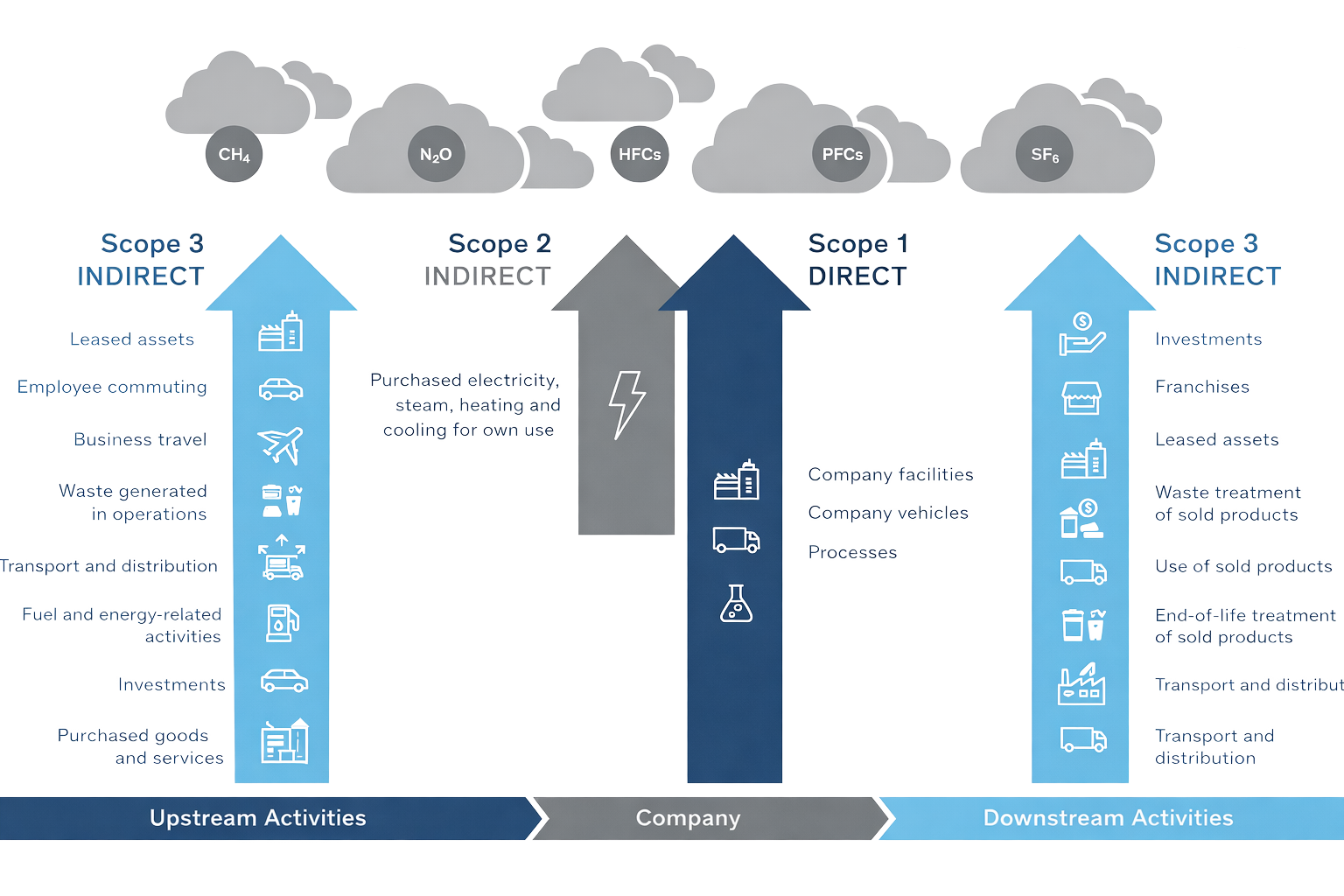
Our Climate & Environmental Management service supports organisations in building a robust and auditable environmental performance framework from baselining to target-setting and implementation.
We support the calculation of carbon footprints across Scopes 1–3, the definition of climate strategies and targets including SBTi alignment, and the development of environmental KPIs covering energy, water, waste, chemicals, and biodiversity. We also map regulatory requirements such as PPWR, REACH, CBAM, and CSRD, and translate them into concrete action plans, governance structures, and monitoring processes that stand up to audits and reporting requirements.

FAQs
Circularity is increasingly embedded in regulation, from product and packaging rules to waste, chemicals, and supply chain legislation. While regulations differ in scope and detail, they consistently push companies towards better lifecycle management, traceability, and resource efficiency. Circularity helps companies anticipate and manage these requirements coherently.
Many organisations struggle to translate high-level circularity ambitions into operational decisions. Circularity concepts are often discussed strategically, but procurement, product design, and operations remain unchanged. Without clear priorities and ownership, initiatives remain fragmented and fail to scale.
Circularity is no longer primarily an environmental topic. It directly affects cost structures, supply security, regulatory exposure, and long-term competitiveness. Resource volatility, regulatory pressure, and dependency on critical materials are forcing companies to rethink linear business models. Circularity is increasingly a resilience and risk management issue.
Manufacturing companies are often most exposed, but circularity affects any organisation with material, product, or packaging dependencies. Retail, consumer goods, healthcare, and even service-oriented businesses face increasing regulatory and market expectations around resource use, waste, and lifecycle impacts. The question is not whether circularity is relevant, but where it is material.
Traditional environmental management often focuses on compliance, emissions, and operational efficiency. Circularity takes a lifecycle perspective and asks how materials, products, and resources are designed, sourced, used, and recovered. It shifts the focus from reducing harm to managing value and risk across the entire lifecycle.
Explore other sustainability services

Insights on sustainability
 ESG & Corporate Responsibilty
 ESG & Corporate Responsibilty